What makes commercial CCTV different from a home system?
Three things: scale, evidence quality, and legal responsibility.
A business site usually has more ground to cover, more entry points, and more distance between buildings than a house. That changes the design completely — it's the difference between running a few cameras back to one recorder and building a proper network that can reach across a whole site.
Evidence quality matters more too. A home camera that shows "someone was here" is often enough. For a business dealing with an insurance claim, a police investigation or a staff dispute, footage needs to be clear enough to actually identify who and what — which comes down to resolution, camera positioning, lens choice and lighting, not just buying a higher megapixel number.
And once you record identifiable people at a business premises, you take on data protection duties that domestic users don't have. A properly designed system accounts for that from the survey stage — see our guide on registering business CCTV with the ICO.
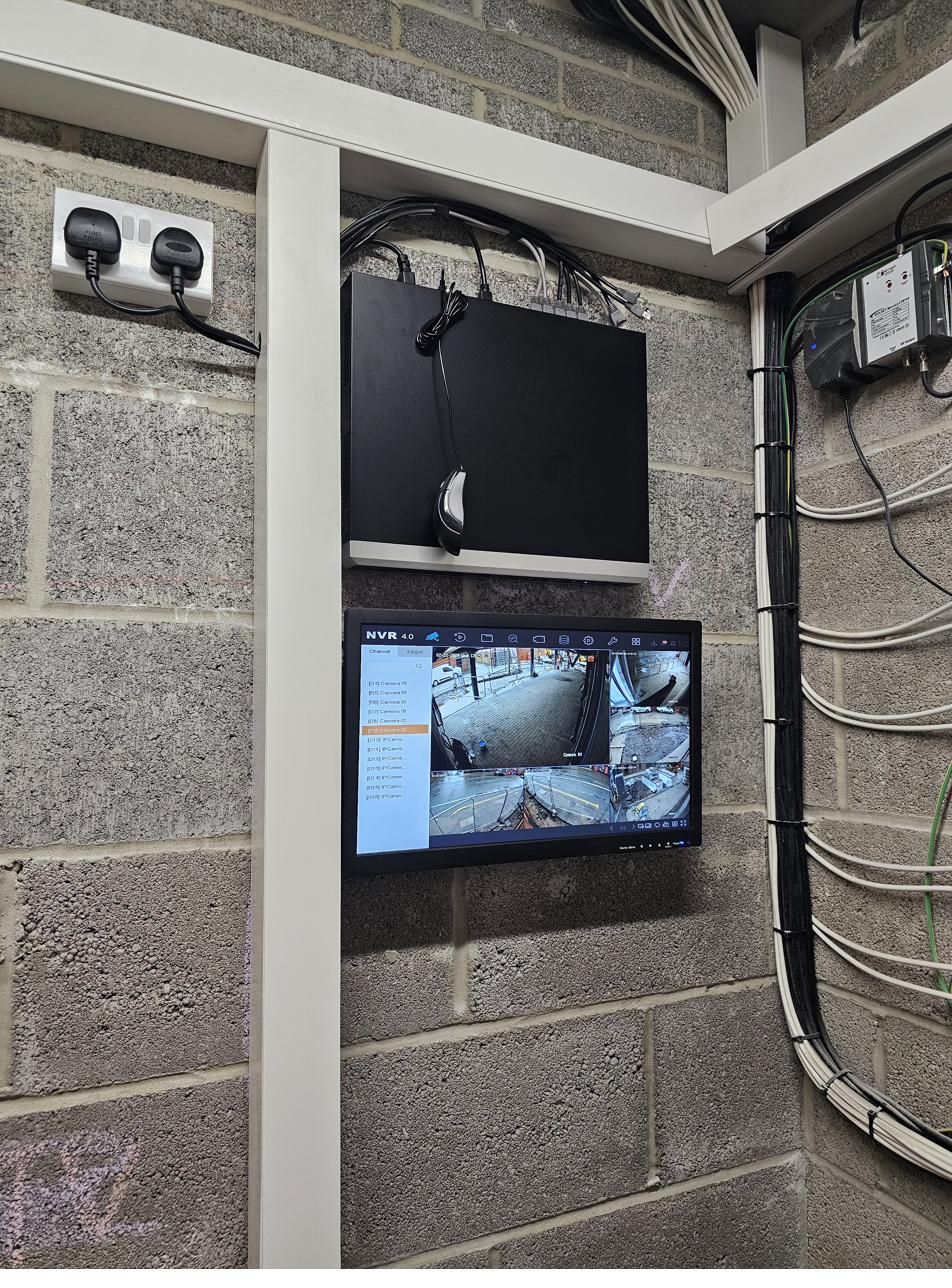
What does a commercial CCTV installation involve?
Site survey first. Before anything is quoted, the site is walked to identify what actually needs protecting, where the genuine weak points are, what the lighting does after dark, and where cameras can be positioned to get usable footage rather than just coverage on paper.
System design. Camera type and position are chosen for the job each one has to do — a wide overview camera and a camera meant to identify faces at a doorway are two different specifications. Network infrastructure is planned so the system can reach the whole site and expand later.
Installation. Cabling run properly and tidily, cameras mounted securely and at the right height and angle, recorder sited somewhere secure, and the system configured and tested — including after dark, which is when most incidents happen.
Handover and support. App access set up so you can view the site from anywhere, a walkthrough of how to pull footage when you need it, and ongoing support afterwards.
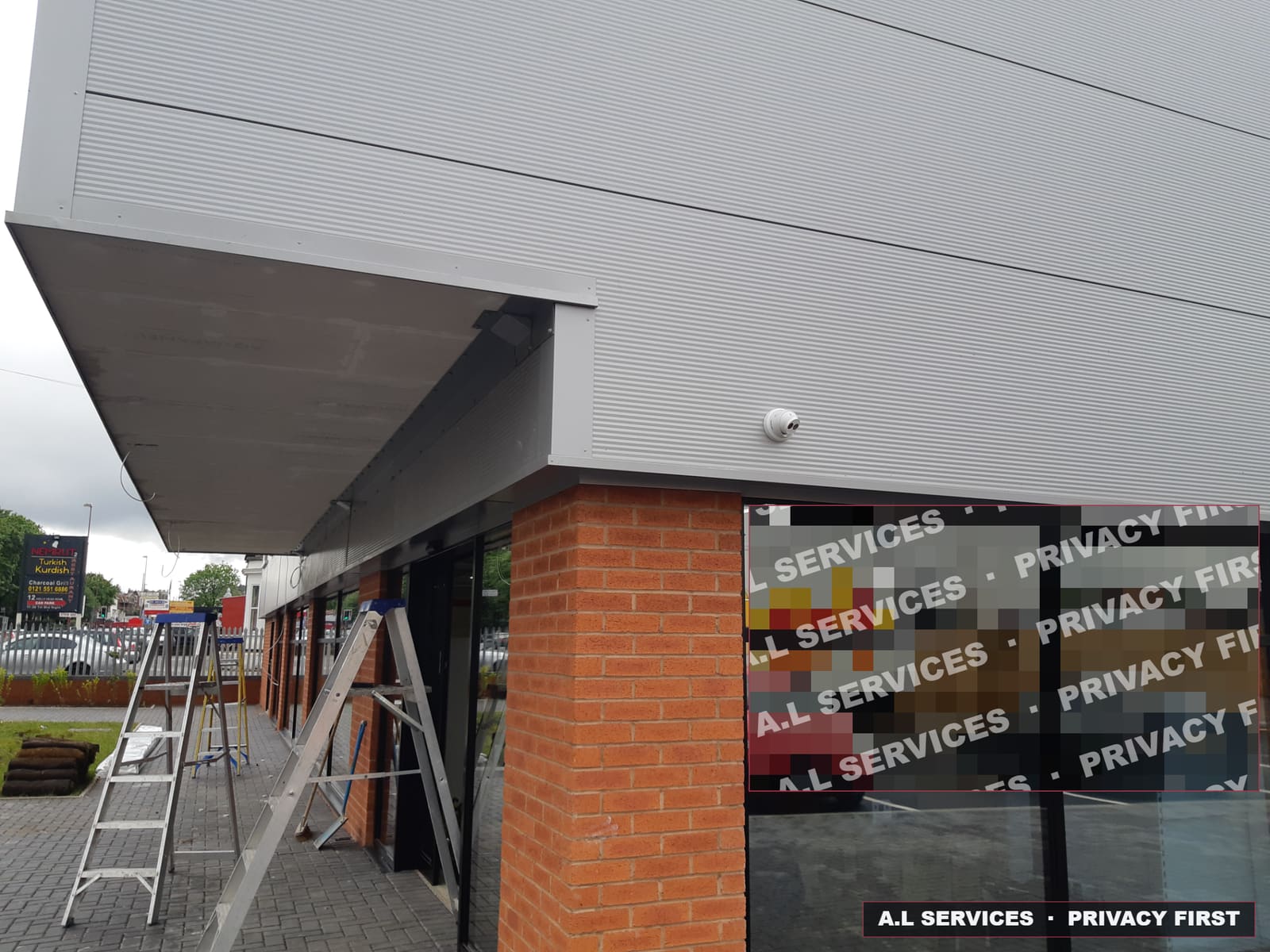
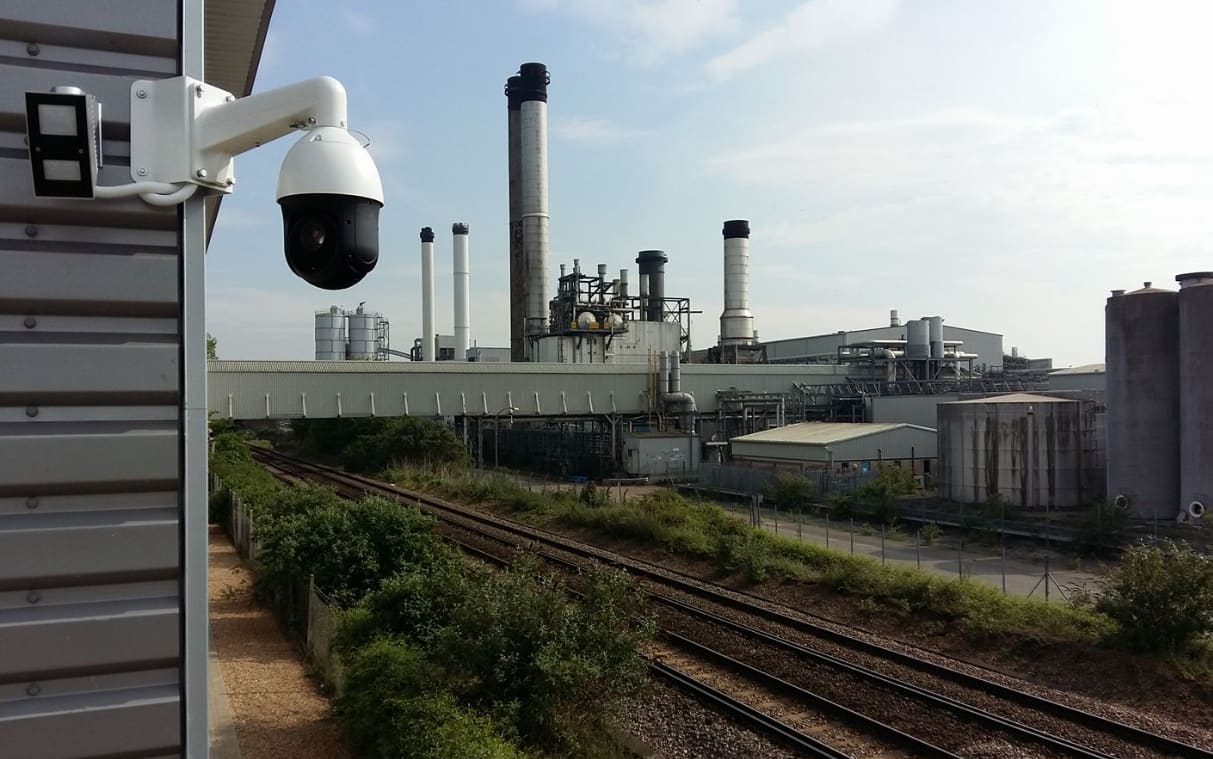
More photographs of real installs — including the recording end with customer footage pixelated — on our work page.
What types of business premises do you cover?
Industrial and light industrial units, workshops and garages, storage and rental units, builders' yards and merchants, retail premises, offices, hospitality, farms and rural businesses, equestrian and livery yards, and holiday lets or glamping sites.
If your site has multiple buildings, a yard, vehicles or plant stored outside, or long distances between the areas you need to watch, that's exactly the kind of job where system design matters most — our farm and rural security page covers the spread-out-site problem in depth.
Why use a specialist rather than a general electrician?
A lot of security work in Lancashire is fitted by electricians who also do CCTV alongside everything else. There's nothing wrong with that on a simple job. But security is all ALServices does — which means camera selection, lens choice, network design, recorder configuration and lighting are decisions made from experience rather than from a supplier's recommended kit list.
You also deal with the same person from survey to handover to support. There's no sales rep quoting a system that a subcontractor then installs.