This is one of the most common questions asked at survey, especially on rural properties where broadband is unreliable — so here's the full picture.
What does the internet connection actually do?
It's easy to assume cameras "send footage to the internet." Most professionally installed systems don't work that way.
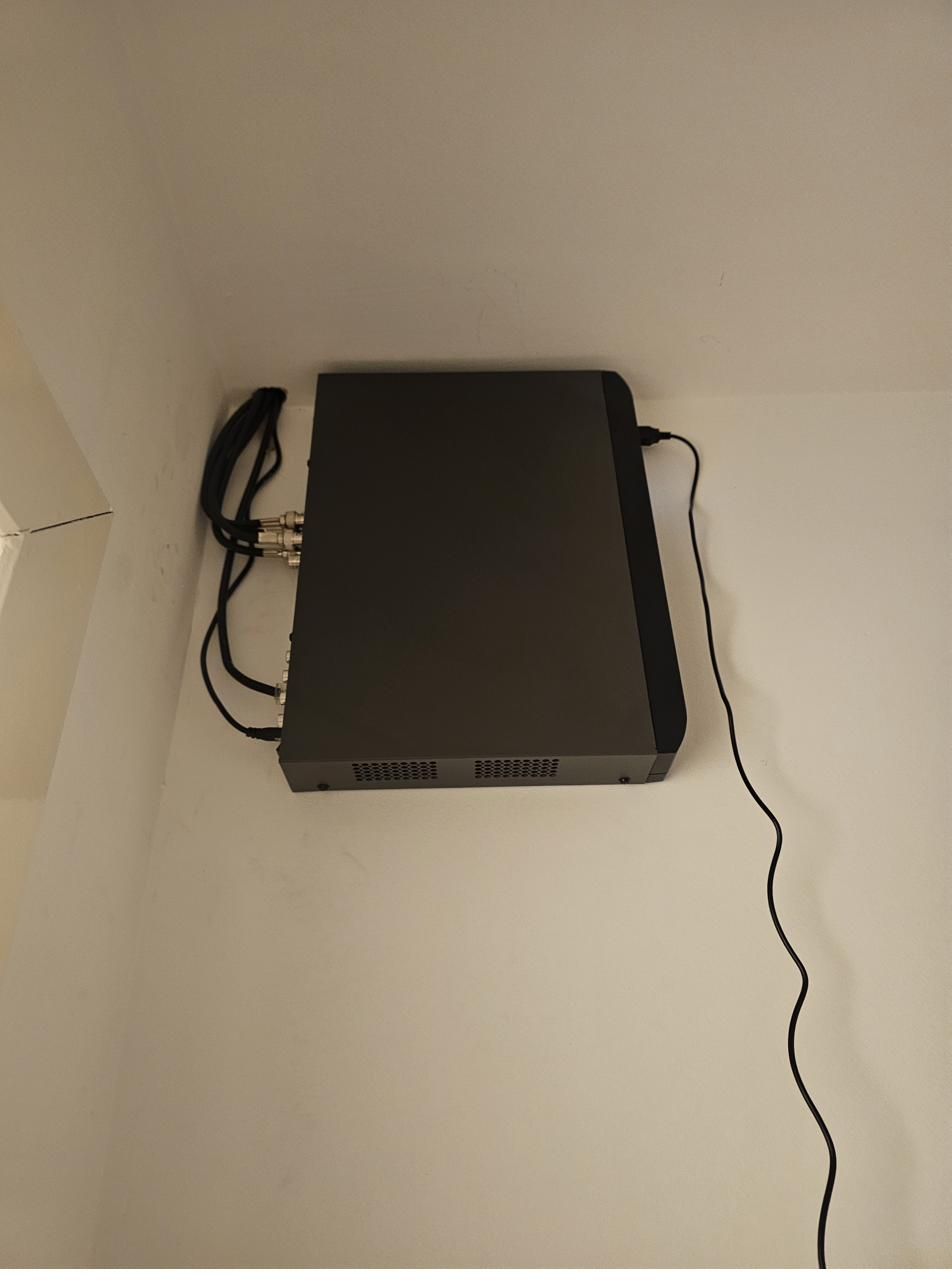
Cameras connect to a recorder (an NVR or DVR) on your premises. That recorder holds the hard drive and does the recording. The internet connection is a separate feature bolted onto that — it lets you view the recorder remotely from a phone or laptop.
So when broadband fails:
- ✅ Cameras keep recording
- ✅ Footage keeps saving to the hard drive
- ✅ Motion detection keeps working
- ✅ Everything is there to review afterwards
- ❌ You can't view live footage remotely
- ❌ App alerts won't reach your phone
Everything that happened during the outage is on the recorder when you get back to it.
Note the exception: some cloud-only cameras — typically cheap consumer units with no local recorder — genuinely do stop recording without internet, because the cloud is their storage. This is one of the real differences between a consumer camera and a professionally installed system, and it's worth knowing before you buy.
What happens in a power cut?
Without backup, the system stops. Cameras, recorder and network switches all need power.
On sites where that's unacceptable — and on most commercial and farm sites it is, because power cuts and break-ins aren't always unrelated — the answer is a UPS (uninterruptible power supply) sized to keep the system running through a typical outage. Alarm panels normally have their own backup battery built in as standard, but CCTV usually doesn't unless it's specified.
Worth thinking about: if someone cuts your power deliberately, a system with no backup goes blind at exactly the moment you need it most.
Is this a problem for farms and rural properties with bad broadband?
Not for recording — which is the reassuring part. Poor rural broadband doesn't stop a system doing its main job. Your footage is safe on site regardless.
It does affect the extras: remote viewing, phone alerts, and cloud backup. If those matter to you and your broadband is unreliable, there are options — 4G/5G backup connections, or configuring alerts to work over mobile data rather than the fixed line.
For most farm clients, the honest advice is: record locally, size the storage properly, add battery backup, and treat remote viewing as a bonus rather than the foundation of the system. There's more on spread-out-site design on our farm and rural security page.
How much footage can a recorder store?
Depends on the drive size, number of cameras, resolution and frame rate. As a rough guide, a typical system might hold two to four weeks of continuous footage, and considerably more if it's set to record on motion rather than continuously.
Two things worth knowing: recorders overwrite the oldest footage when full, so incidents need to be reviewed and saved before they're overwritten. And business users have a legal angle here too — footage shouldn't be kept longer than necessary, which usually means configuring retention deliberately rather than leaving it at the default. See our guide on business CCTV and the ICO.