What is a bells-only alarm?
A bells-only (or "audible") alarm sounds an internal and external siren when triggered. There's no signal sent anywhere — it depends entirely on someone nearby hearing it and acting.
It works well when: your premises are overlooked, you have neighbours or nearby businesses who'd notice, or you're mainly deterring opportunist intruders who'll leave the moment noise starts.
It works badly when: the property is isolated, nobody is nearby at night, or the intruders are organised enough to know that a siren nobody responds to is just noise.
Bells-only systems are cheaper to install and have no ongoing monitoring fees. On the right property they're a perfectly sensible choice.
What is a monitored alarm?
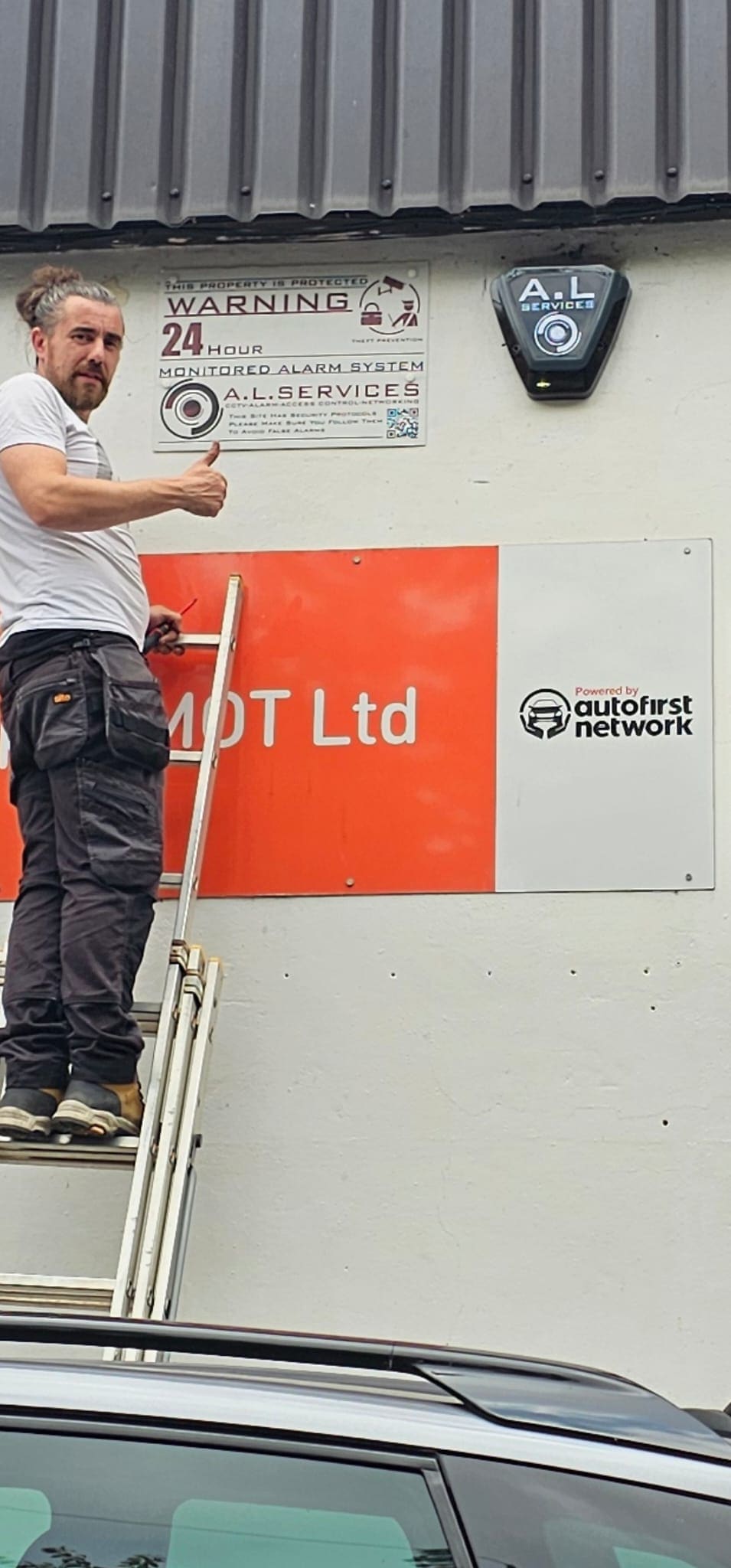
A monitored alarm sends signals to a 24-hour Alarm Receiving Centre (ARC), which follows an agreed procedure when an activation comes in — typically verifying the alarm and contacting nominated keyholders.
The key advantage isn't just that someone knows — it's that someone knows and responds at 3am whether or not you're awake, on holiday or out of signal.
Monitoring carries an ongoing cost, usually monthly or annually.
What about app alerts — is that "monitored"?
This is where a lot of confusion sits, and it's worth being clear.
App-based self-monitoring sends alerts straight to your phone, often with video clips so you can see what triggered it. It's genuinely useful, costs little or nothing ongoing, and for many homes and small premises it's a big improvement on bells-only.
But it isn't professional monitoring, and it has a real limitation: it depends on you. Awake, phone charged, in signal, and able to act. If you're asleep, abroad, driving or in a dead spot, nothing happens. For a home, that's often an acceptable trade-off. For a commercial site holding significant stock or plant, it's worth thinking about honestly.
The strongest setup for many businesses is both — professional monitoring for guaranteed response, plus app alerts so you're informed in real time.
What is police response and how do I get it?
This is the level above standard monitoring, and there are strict rules around it that are worth understanding before anyone sells you one.
Police response requires the property to have a Unique Reference Number (URN) registered with the police. To get one, the system must be installed and maintained by a company accredited by NSI or SSAIB, and must meet the relevant standards and National Police Chiefs' Council requirements. Without accreditation, no URN — regardless of how good the system is.
Two further things worth knowing:
Police attend confirmed alarms. Systems are designed so that a single activation doesn't automatically call the police — confirmation (from a second detector, or from audio or video verification) filters out false alarms.
False alarms have consequences. Repeated false activations can result in police response being withdrawn from a property, which can in turn affect insurance. This is why system design and correct detector placement matter enormously on police-response systems.
So which should I choose?
Work through these honestly:
- Is anyone within earshot at night? If no → bells-only is doing very little.
- What's the value of what's inside? Higher value shifts the case towards monitoring.
- How long could an intruder work undisturbed? Isolated sites give thieves time, which is exactly what monitoring takes away.
- Does your insurer specify anything? Check the policy wording — some require a specified grade or type of system as a condition of cover, and installing below it can affect a claim.
- Are you realistically able to respond to an app alert at 3am? Be honest about this one.
For business premises, our business intruder alarms page covers grades, wired vs wireless and what an installation includes.